
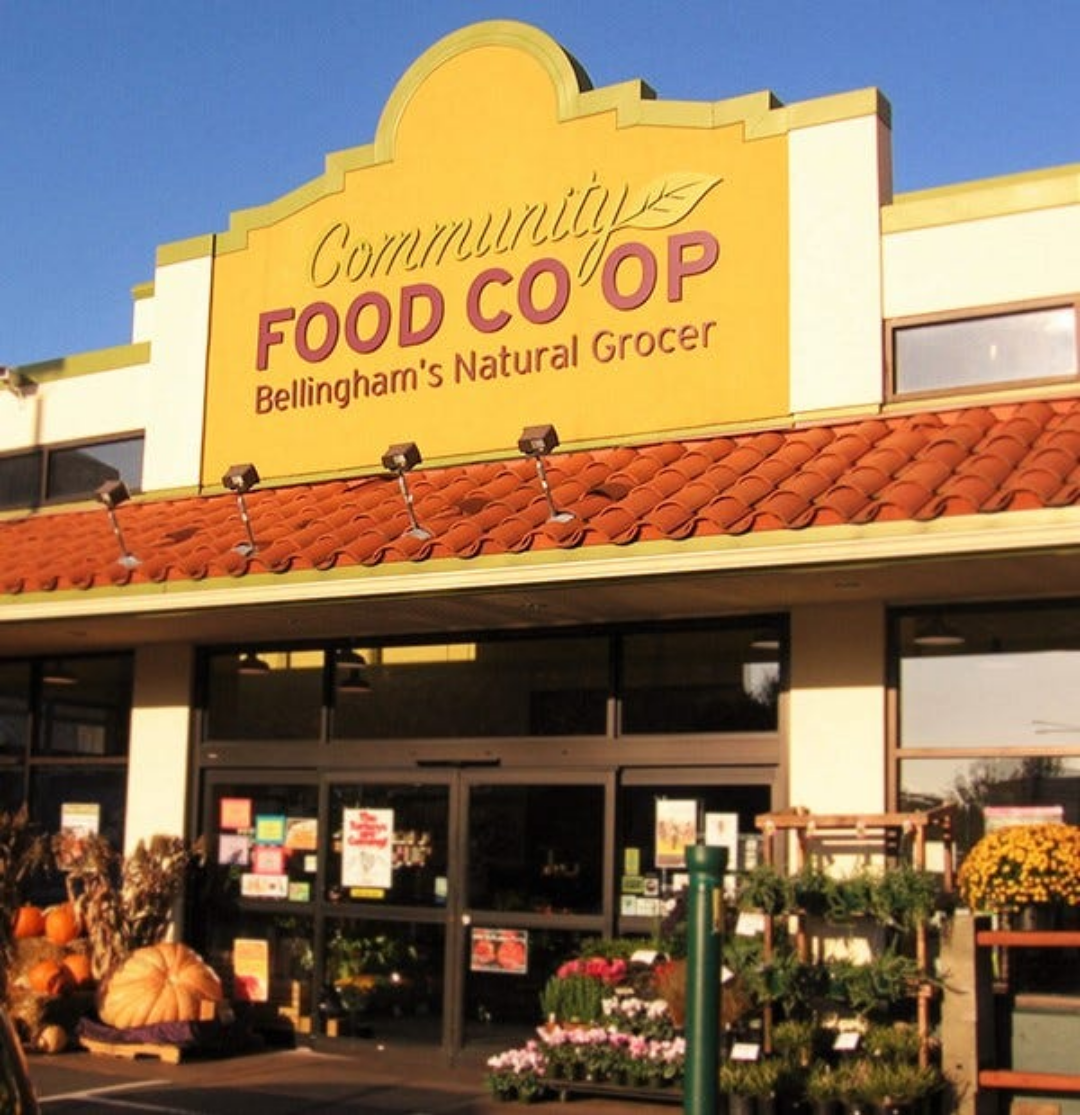
Community
Food Co-Op
With Melissa
Caught and Woven by: Kai Drotz, Jaden Walter, Brody Robinson, and Leyton Irey
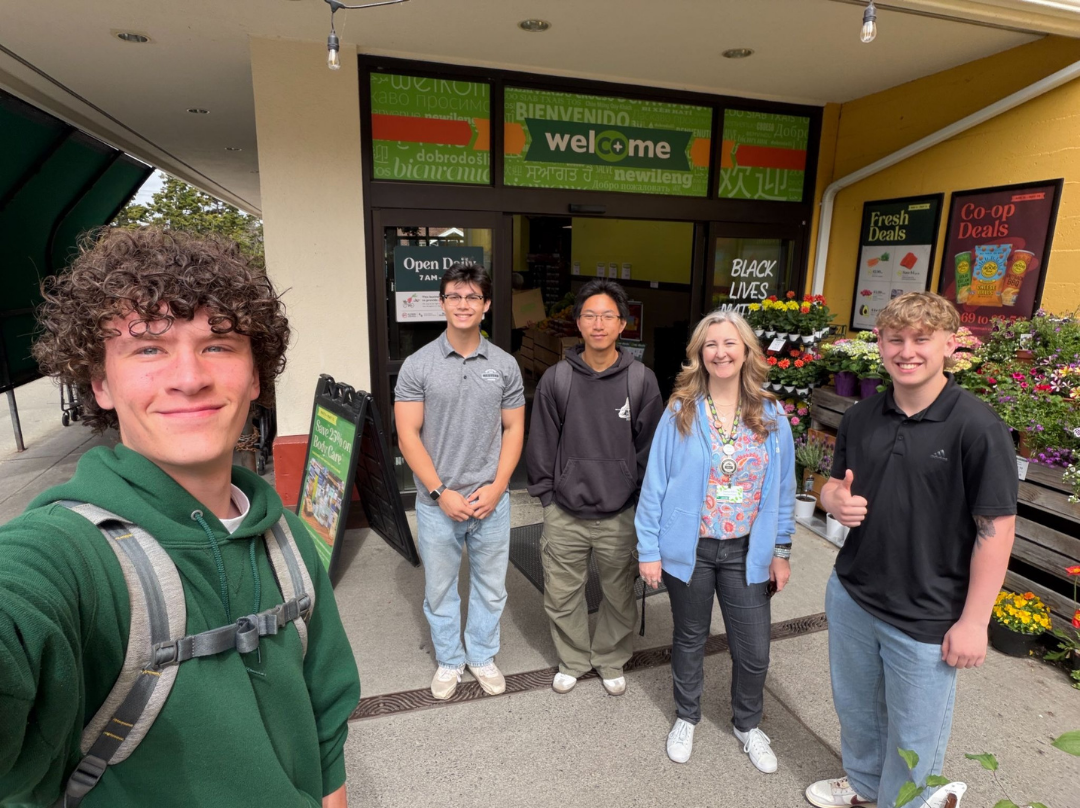
Throughout our interview, one message became very clear: while food is central to what they do, community is at the heart of their mission. As Melissa explained during our conversation, “Food may be our middle name, but community comes first.” That idea could be seen throughout nearly every part of the Co-op’s operations.
Sustainability Through a
Community-Owned Model
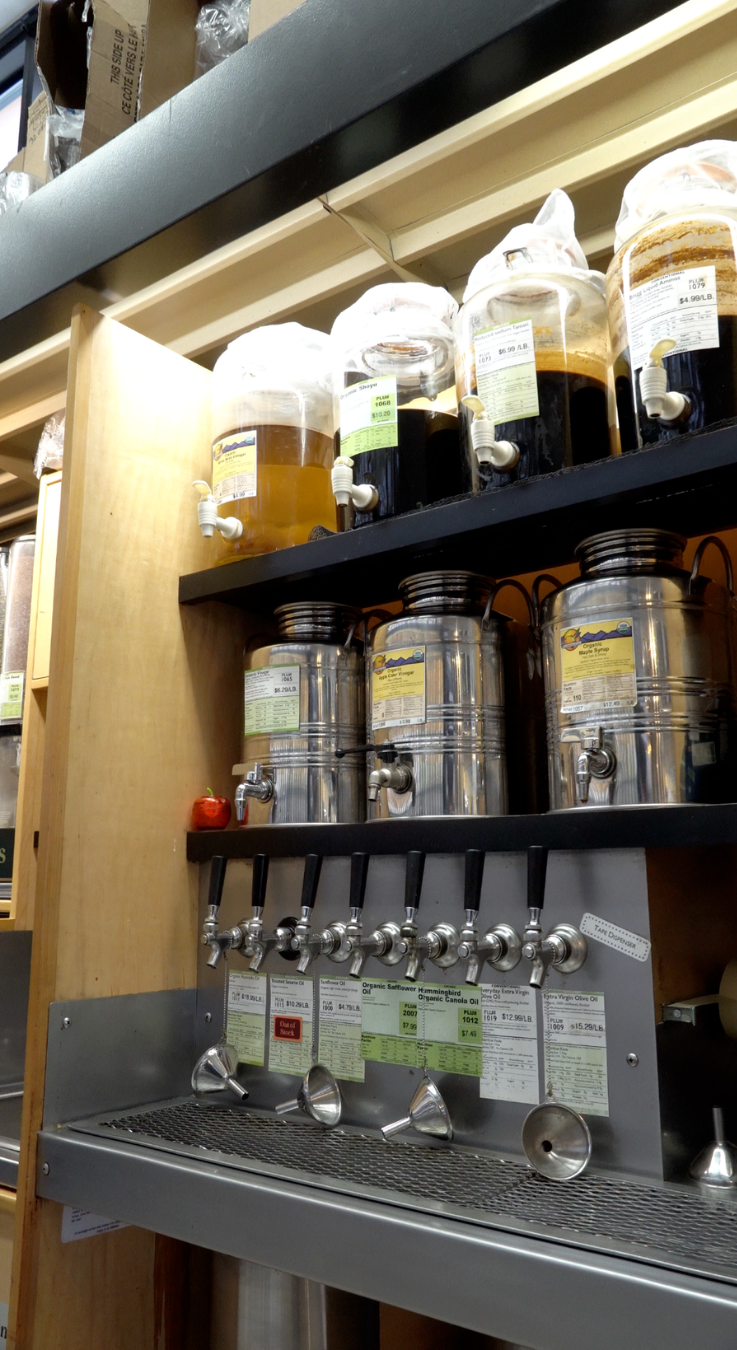
One of the most interesting parts of our interview was learning how sustainability is built directly into the Co-op’s business model. Unlike traditional grocery stores that are primarily profit-driven, the Co-op focuses heavily on local relationships, long-term community impact, and responsible sourcing practices.
The Co-op’s buying standards help support sustainability goals by prioritizing local products, ethical sourcing, and environmentally responsible options whenever possible. Melissa explained that sustainability is not handled by one single department, but instead is something that involves the entire organization. From produce and bulk foods to the deli and operations teams, employees across departments all contribute to sustainability efforts. As she explained, “It takes a village for sustainability.”
This collaborative mindset reflects many of the Sustainable Development Goals, especially responsible consumption and production, sustainable communities, and climate action.
Balancing Sustainability and Affordability
One major topic we discussed was the challenge of balancing sustainability with affordability and accessibility. Sustainable food is often viewed as expensive or inaccessible, especially for students and lower-income households. The Co-op actively works to address this issue through discounts, community programs, and partnerships with local organizations.
We learned that the Co-op tries to make healthier and more sustainable food choices more realistic for the local community rather than treating sustainability as something only available to people with higher incomes. Their work highlights an important idea: sustainability is not just about environmental impact, but also about making healthy food systems accessible to more people.
Community Impact in the Salish Sea Region
Because the Co-op is deeply connected to the Bellingham community, sustainability efforts often extend beyond the store itself. Melissa discussed partnerships with schools and local organizations, along with community events that help engage residents in sustainable food systems.
One concept that stood out during our interview was the idea of the Co-op serving as a “third space.” Beyond simply being a grocery store, the Co-op acts as a place where community members can gather, connect, and learn more about sustainability and healthy food practices.
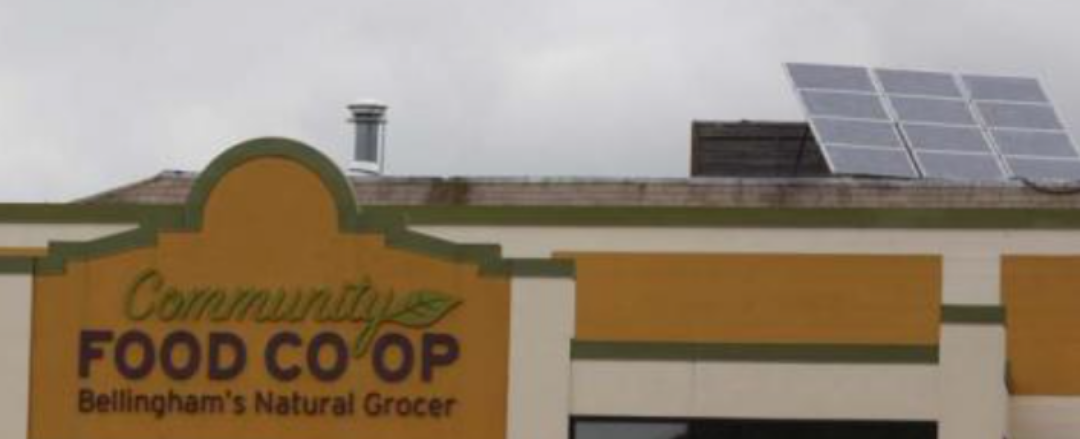
The Co-op’s impact can also be seen through operational sustainability improvements.
One example Melissa shared was that the Co-op’s solar panels generated approximately 81 percent of the building’s energy this year.
While customers may not immediately notice changes like this, these behind-the-scenes investments can create significant environmental impact over time.
Looking Toward the Future
During the interview, we also discussed the future of sustainable food systems. Melissa spoke about upcoming community events, including “Western Wednesday,” which helps strengthen community engagement around local food and sustainability.
When discussing the future, Melissa emphasized the importance of consumer choices and community involvement. One statement that stood out to our team was: “Where you spend your dollars.” This idea reflects how consumer decisions can directly influence food systems, local economies, and sustainability efforts.
We also discussed growing public interest in sustainable food systems, along with the importance of education and awareness. Melissa encouraged people to continue learning about food systems and sustainability through books, documentaries, and community engagement.
Personal Reflection
Our experience visiting and interviewing the Bellingham Food Co-op helped us better understand how sustainability can show up across an entire organization rather than through isolated programs. Sustainability was visible not only through environmental practices, but also through community relationships, accessibility efforts, employee collaboration, and long-term thinking.

This project also changed the way we think about sustainability in our own daily lives. Before this experience, sustainability often felt like a broad global issue. However, after learning more about the Co-op’s work, sustainability became something much more local and personal.
It showed us how businesses and communities in the Bellingham community are already taking meaningful steps toward creating more responsible and connected food systems in Bellingham.
Through this experience, we learned that sustainability is not just about protecting the environment. It is also about building healthier communities, supporting local relationships, and creating systems that allow people to make better choices for themselves and for the future.
Conclusion
The Bellingham Food Co-op demonstrates how sustainability can be integrated into both business operations and community culture. Through local sourcing, accessibility programs, environmental initiatives, and community engagement, the Co-op continues working toward a more sustainable and connected future for the Bellingham community.
Our team’s visit and interview gave us valuable insight into the challenges and opportunities involved in sustainable food systems. More importantly, it reminded us that meaningful change often begins at the local level through communities, relationships, and the choices people make every day.
SDGs

SDG 12: Responsible Consumption & Production
Encouraging efficient use of resources and energy, infrastructure, and processes can help decouple economic growth from environmental degradation

SDG 13: Climate Action
Taking urgent action to combat climate change and its impacts is essential to protect both the environment and human life, as well as to ensure the sustainability of economic development strategies worldwide.

SDG 11: Sustainable Cities & Communities
Urban areas are growing rapidly. Making cities and human settlements inclusive, safe, resilient, and sustainable is crucial to preventing negative environmental impacts and providing quality life for all residents